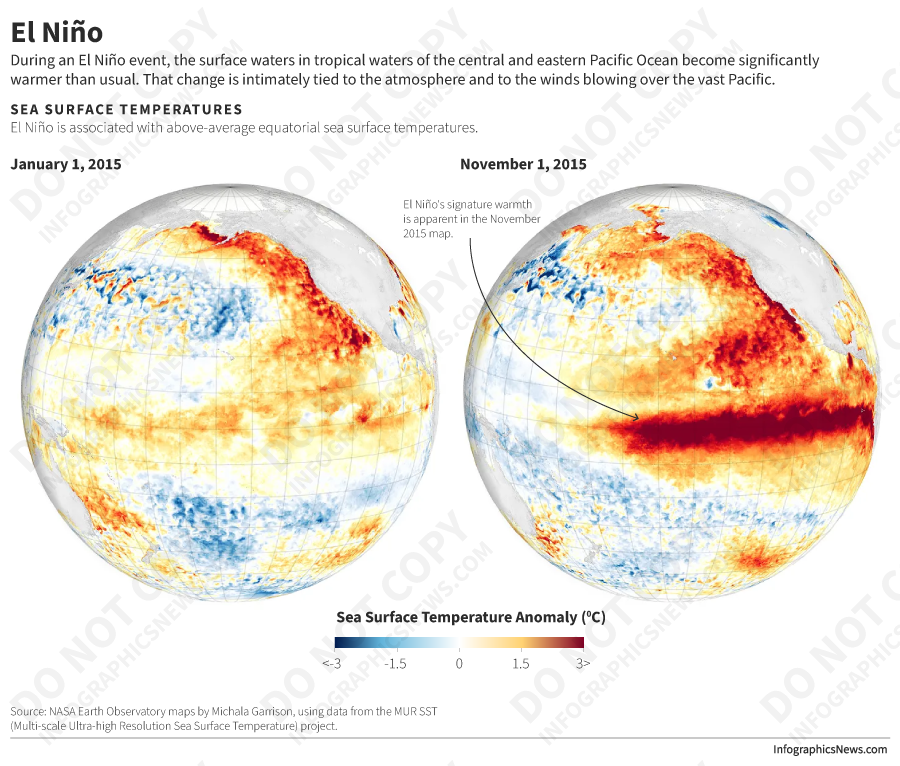
El Niño is associated with above-average equatorial sea surface temperatures. El Niño's signature warmth is apparent in the November 2015 map.
Please Sign In To Contact This Author
During an El Niño event, the surface waters in tropical waters of the central and eastern Pacific Ocean become significantly warmer than usual. That change is intimately tied to the atmosphere and to the winds blowing over the vast Pacific. Easterly trade winds (which blow from the Americas toward Asia) falter and can even turn around into westerlies. This allows great masses of warm water to slosh from the western Pacific toward the Americas. It also reduces the upwelling of cooler, nutrient-rich waters from the deep—shutting down or reversing ocean currents around the equator and along the west coast of South and Central America.